Category: Blog

June 19: A Date That Keeps Returning

June 19 has become one of the most remarkable and emotionally charged dates in Haitian football history—not because it was chosen, but because history chose it.

June 19: A Date That Keeps Returning

In world history, June 19 is best known as Juneteenth, commemorating the end of slavery in the United States and symbolizing liberation, resilience, and the triumph of hope over oppression.

For Haiti—the world’s first Black republic born from a successful slave revolution—the symbolism of Juneteenth carries an even deeper resonance. Haiti’s very existence is tied to the struggle for freedom and dignity.

Yet, in FIFA World Cup history, June 19 has delivered Haiti some of its most painful moments.

The June 19 pattern, confirmed

June 19, 1974 — Munich, West Germany. In Haiti’s World Cup debut tournament, the Grenadiers lost to Poland, 7-0.

June 19, 2026 — Philadelphia, USA. Brazil beat Haiti 3-0 at Lincoln Financial Field, in Haiti’s second-ever World Cup match against the group’s heavyweight.

So yes — fifty-two years apart, almost to the day, Haiti has now lost twice on June 19th, both times to the tournament’s giants of the moment (Poland was a rising power in ’74; Brazil is Brazil now). Whether that’s destiny, coincidence, or just brutal scheduling luck is a matter of taste — but the dates line up exactly as you describe.

Is there a third June 19 test coming?

No — and this is the good news for Haiti. Their final group game is set for Wednesday, June 24, against Morocco at Mercedes-Benz Stadium in Atlanta. That’s the only fixture left in the group stage, and it falls on the 24th, not the 19th. So Haiti’s “June 19 curse,” if you want to call it that, doesn’t get a third chance to repeat itself this cycle — at least not in the group phase.

What it would take to “rewrite history”

Haiti’s run to 2026 has already been described as the unthinkable, given the obstacles facing the country’s soccer program — simply qualifying after 52 years away is itself a story of resilience. Notably, former Haitian international James Marcelin’s 2016 goal against Brazil remains Haiti’s only strike to date against this specific Group C opponent, which gives you a sense of how rare a positive moment against Brazil has been for the Grenadiers historically.

With one match left — Haiti vs. Morocco on June 24 — a win or even a draw combined with other results could theoretically keep a knockout-stage push alive, depending on the final group table. After two defeats (0-1 to Scotland, 0-3 to Brazil), it’s a steep climb, but not yet mathematically dead.

Group C standings after Matchday 2 (as of June 19, 2026)

PosTeamPWDLGFGAGDPts
1Brazil211041+34
2Morocco211021+14
3Scotland21011103
4Haiti200204-40

Results so far: Morocco 1, Scotland 0 and Brazil 3, Haiti 0 on June 19, following Brazil 1, Morocco 1 and Scotland 1, Haiti 0 on June 13. Brazil and Morocco both won on Friday and moved into first and second place, dropping Scotland to third.

Bottom line: Haiti is mathematically eliminated. With zero points and a -4 goal difference after two matches, the most Haiti can finish on is 3 points (a win over Morocco on June 24). Scotland already has 3 points and plays Brazil — even if Scotland loses, they’d still finish on 3 points with a much better goal difference than Haiti could ever produce. There’s no combination of results on June 24 that lets Haiti finish above Scotland or claim one of the two automatic group spots or a third-place wildcard berth, since:

  • Haiti’s ceiling is 3 pts, -1 GD (best case: beat Morocco 1-0).
  • Scotland’s floor is 3 pts, with a GD of at most -3 (if they lose big to Brazil), but more realistically much better than Haiti’s.
  • Even in a freak scenario where Scotland loses very heavily to Brazil, Haiti still can’t catch them on points, and tiebreakers (head-to-head: Scotland beat Haiti 1-0) settle it anyway since Haiti has zero realistic path to overtaking on points.

So June 24 against Morocco is now a pride match, not a path to the knockout rounds.

528 Million Gourdes Injected Into Haitian Football

Show Me the Money: Inside Haiti’s World Cup Windfall — and the Federation Controlling It

When Haiti’s national team — Les Grenadiers — walked onto a Port-au-Prince stage in early April to receive two ceremonial checks from the Prime Minister’s office, it marked something close to a financial miracle for a federation more accustomed to scandal than surplus. Fifty-two years after Haiti’s only previous World Cup appearance, in West Germany in 1974, the country is back on football’s biggest stage. But the money trail behind that return tells a more complicated story than the celebration suggests — one that runs through FIFA’s payout structure, a cash-strapped government’s political theater, and a federation with a documented history of losing track of player bonuses.

Video: AyiboSport via YouTube

What FIFA actually guarantees Haiti

Start with the baseline. Every one of the 48 nations at the 2026 World Cup — including Haiti — receives a $2.5 million preparation fee simply for qualifying, plus a minimum $10 million payout for a group-stage exit. Combined, that’s a guaranteed floor of $12.5 million that FIFA wires directly to the federation, not the players, regardless of how Haiti performs against Brazil, Morocco, and Scotland in Group C.

That $12.5 million is the absolute minimum. If Haiti somehow advances out of the group, the number climbs — $11 million for a Round of 32 exit, up through a $50 million jackpot for the eventual champion, out of FIFA’s record $871 million total prize pool for this cycle.

It’s worth being precise about a separate figure that often gets conflated with this one: the $355 million Club Benefits Programme. That money does not go to Haiti, or to any federation. It’s paid directly to the professional clubs — Lille, AS Monaco, MLS sides, and others — that release Haitian internationals like captain Johny Placide or top scorer Duckens Nazon for international duty. It compensates clubs, not countries, and for the first time in 2026 it also covers release time during qualifiers, not just the tournament itself.

How much does an individual Haitian player actually earn?

Here FIFA’s rulebook is unambiguous: FIFA pays federations, not players. There is no line item, no individual wire transfer, no FIFA-issued check with a Haitian player’s name on it. What a Grenadiers player ultimately pockets depends entirely on what the FHF — and, this cycle, the Haitian state — chooses to pass down.

That’s where this World Cup cycle becomes unusual. Most national federations negotiate a collective bargaining agreement and typically funnel somewhere around 20 to 30 percent of total FIFA prize winnings to players as bonuses, with the rest absorbed by federation operations, technical staff, and infrastructure. Haiti hasn’t published that kind of formal CBA-based split for the FIFA money itself. What Haiti has done is route a separate, parallel payment — from the government, not FIFA — straight into players’ pockets before a single match is played.

The government’s $4 million intervention

In early April 2026, Haiti’s government — operating under enormous fiscal strain, with the country’s main stadium, Sylvio Cator, shuttered since February 2024 because it sits in a gang-controlled section of Port-au-Prince — allocated 528 million gourdes, or over $4 million, to the Haitian Football Federation, splitting the funds between a World Cup qualification bonus and preparations for the tournament. The money came from two different arms of government: the Prime Minister’s Office funded the bonus, while the Ministry of Youth, Sports and Civic Actions financed the preparation effort, with both checks presented at a ceremony at Villa d’Accueil in Port-au-Prince on April 8.

The split was deliberate and public: half of the funding — $2 million — was awarded to the national team as a prize for qualifying, while the remaining $2 million was earmarked for training and logistical preparations ahead of the tournament.

Run the math on the player side of that ledger. Haiti’s official World Cup squad sits at 26 players. Split the $2 million qualification bonus evenly across that roster, and each player’s share comes out to roughly $76,900 — not the $86,956 figure sometimes floated, which would only apply to a smaller 23-man squad (FIFA’s old standard squad size, since expanded for the 2026 cycle). The exact per-player number ultimately depends on whether the FHF distributes the bonus equally, weights it by appearances or seniority, or carves out a different share for technical staff — and the federation has not published that formula.

Discretion, history, and the trust deficit

This is where the story stops being simple arithmetic and starts being an accountability question.

The FHF, like virtually every national federation, has full legal discretion over how it distributes FIFA prize money among players, coaches, and operations. That discretion is not, by itself, improper — CONCACAF and FIFA statutes don’t mandate a specific player-bonus percentage, and federations from the U.S. to England all exercise similar control over their windfalls. Discretion is the norm, not the exception.

But discretion only works when it’s paired with trust, and the FHF’s track record on that front is genuinely troubled. After Haiti’s historic third-place finish at the 2019 Gold Cup, CONCACAF paid the federation USD $200,000 for the team’s performance. Years later, players were still waiting. The sum owed to each of the 23 players ranged from USD $3,200 to $4,000, and according to Haitian investigative outlet AyiboPost, the bonuses for that 2019 campaign were never paid out — diverted by the federation despite the money having been received. One player, speaking anonymously to The Haitian Times, summed up the players’ position bluntly: “Every time we check our bank accounts, we don’t see anything.”

That history — money arriving at the federation and not reliably reaching the players who earned it — is the real context for why this cycle’s government bonus looks the way it does. By having the Prime Minister’s Office cut a check earmarked explicitly for player bonuses, presented publicly, with a player (midfielder Woodensky Pierre) standing on stage to receive it, the state appears to have built in a layer of political accountability that bypassed the FHF’s historically opaque internal process. It’s a structure that makes diversion harder, not because the law requires it, but because the optics of broken promises now belong to the Prime Minister’s office as much as the federation.

So is the FHF doing something illegal? Based on the public record, there’s no documented evidence of criminal activity in this 2026 cycle — no indictment, no court finding, no audit alleging theft. What exists is a pattern: a federation with unchecked discretionary control over player money, a 2019 precedent in which that discretion produced an undisputed failure to pay players what they were owed, and a 2026 funding structure that was visibly designed, by the government rather than the federation, to avoid repeating it.

What remains genuinely opaque is the FIFA prize money itself — the $12.5 million-plus the FHF will receive regardless of group-stage outcome. FHF President Monique André and the federation’s committee hold sole authority over how much of that money reaches players as performance bonuses, and as of this writing, no percentage split has been made public. Haitian players and the diaspora following this tournament are, in effect, being asked to trust that the same institution that failed to deliver Gold Cup bonuses six years ago will handle a fund roughly 60 times larger with full integrity — backed by nothing but the federation’s word.

The bottom line

Haiti’s players are walking into the 2026 World Cup with more guaranteed, transparent money in hand than at any point in the federation’s history — roughly $77,000 each from a government check that was presented in public, to a player, on a stage. That’s a genuine, documented improvement over the Gold Cup era. But it sits alongside an entirely separate, much larger pool of FIFA money — at least $12.5 million — whose distribution remains entirely at the FHF’s discretion, unaudited and unannounced. The federation hasn’t done anything proven to be unlawful. It also hasn’t done the one thing that would resolve the lingering doubt: publish the number.

June 19: Haiti’s Date With Destiny — From Poland 1974 to Brazil 2026

By Grenadiers Nation | Sports Analysis | June 19, 2026

Will History Continue to Haunt Haiti, or Will the Grenadiers Rewrite It?

For Haitian football supporters, June 19 is more than just another date on the calendar. It is a day forever linked to one of the most difficult moments in the history of the national team—a painful reminder of the challenges faced by a courageous group of pioneers who carried Haiti’s flag onto the world’s biggest stage.

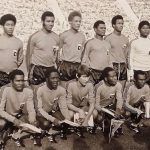
On June 19, 1974, at the FIFA World Cup in Munich, Germany, Haiti played its second-ever World Cup match against a powerful Polish side. What followed was a harsh lesson in the realities of elite international football.

Poland overwhelmed the tournament debutants with a commanding 7-0 victory, exposing the gap between an experienced European powerhouse and a Caribbean nation making its historic World Cup appearance. The defeat remains the heaviest loss in Haiti’s World Cup history.

Yet, despite the scoreline, that Haitian team achieved something no other generation before them had accomplished. They qualified for the FIFA World Cup and proudly represented the Caribbean on football’s grandest stage. Their legacy continues to inspire every Haitian player who wears the blue and red jersey today.

Fifty-Two Years Later: Another June 19 Test

Remarkably, exactly 52 years later, Haiti once again finds itself preparing for a defining June 19 encounter.

On June 19, 2026, the Grenadiers will face five-time FIFA World Cup champions Brazil in a crucial Group C match at Philadelphia Stadium (Lincoln Financial Field). Kickoff is scheduled for 9:00 PM EDT.

The parallels are impossible to ignore.

Just as the 1974 squad faced one of Europe’s strongest teams, the 2026 generation now prepares to battle one of the most successful football nations in history.

Brazil enters the contest as a global football giant, boasting a tradition built by legends such as Pelé, Zico, Romário, Ronaldo, Ronaldinho, Kaká, and Neymar. Haiti, meanwhile, enters as the determined underdog seeking to make history and prove it belongs among the world’s elite.

The Scotland Setback

The challenge facing Haiti is even greater following its opening Group C defeat to Scotland.

The Grenadiers showed determination and organization but ultimately fell 1-0, leaving them with little margin for error in the race for qualification.

Against Brazil, Haiti will likely need more than just resilience. The team must deliver one of the greatest performances in its football history.

A positive result against Brazil would not only transform Haiti’s chances of advancing from Group C but would also become one of the most significant achievements ever recorded by the national team.

Different Generations, Different Circumstances

While the coincidence of the date fuels discussion among supporters, the situations are not identical.

The Haiti of 1974 entered the World Cup with limited international exposure and little experience against elite competition.

The Haiti of 2026 is a more globally connected squad. Many players compete professionally in Europe, North America, and other international leagues. The modern Grenadiers have gained valuable experience through CONCACAF competitions and high-level international fixtures.

Today’s Haitian players understand the magnitude of the challenge, but they also understand that football history is not predetermined.

Can Haiti Rewrite the Narrative?

Football is filled with unforgettable upsets.

On countless occasions, favorites have fallen and underdogs have risen to create moments that live forever in World Cup history.

For Haiti, June 19, 2026 presents exactly that possibility.

The date that once symbolized heartbreak could become a date of redemption.

The date that reminds supporters of Munich could instead become associated with Philadelphia.

Whether June 19 continues to haunt the Haitian national team—or becomes the day the Grenadiers authored one of the greatest results in their history—will be decided on the field.

One thing is certain:

Fifty-two years after the painful defeat to Poland, Haiti once again faces a football giant on June 19.

This time, the Grenadiers have an opportunity not simply to remember history, but to make it.

Les Grenadiers in West Germany: Haiti’s Historic — and Heartbreaking — 1974 World Cup Story

By Grenadiers Nation Staff | June 2026

Before 2026, there was only 1974. For 52 years, a single tournament in West Germany was the one and only chapter in Haiti’s World Cup story. And what a chapter it was — full of pain, of pride, and one moment so stunning that it echoed across more than half a century of football history.

This is the story of Haiti at the 1974 FIFA World Cup. Three matches. Two goals. One unforgettable legend. And a nation that left West Germany with its head held higher than the scorelines ever suggested.

Getting There: The Qualification Story

Haiti earned their place in West Germany by winning the 1973 CONCACAF Championship — on home soil in Port-au-Prince. The hosts racked up four wins in five games, with their only setback coming when Mexico edged them out 1-0 in their final encounter. However, that did not prevent them from topping the overall standings and securing their spot in West Germany.

For a small Caribbean nation competing against the Americas’ most established football powers, it was a remarkable achievement. Coach Antoine Tassy had built something real. Haiti arrived in West Germany not just happy to be there — they arrived believing.

Tournament Overview & General Statistics

What Haiti faced in West Germany was one of the toughest group draws imaginable. The Haitians were drawn into an extremely tough group in the first round, lining up alongside Italy — runners-up at the previous edition — an Argentina side featuring the likes of Mario Kempes, and a Grzegorz Lato-inspired Poland team, who would go on to clinch the final podium place.

Here is how the numbers broke down across Haiti’s three Group 4 matches:

Match 1: Italy 3–1 Haiti — The Moment That Shook the World

June 15, 1974 | Olympiastadion, Munich | Attendance: 51,100

No match in Haitian football history carries more weight than this one. And the reason is six letters: D-I-N-O Z-O-F-F.

Going into this group opener, Italy’s legendary goalkeeper Dino Zoff was in the middle of one of the most extraordinary streaks in football history — a run of 1,142 consecutive international minutes without conceding a goal. He was untouchable. Unbeatable. A colossus in Italian blue.

Haiti had other ideas.

In the 46th minute — right after halftime, before Italy could catch their breath — Philippe Vorbe split the Italian defense with a brilliant pass to Emmanuel Sanon. Sanon ran through, rounded the great Zoff with ice-cold composure, and slotted the ball into an empty net.

The record was shattered. The stadium fell silent. A player from a tiny Caribbean island had done something no one in the world could do for nearly two years — he had beaten Dino Zoff.

It was one of the single greatest moments in World Cup history. And it happened in a Haiti shirt.

Italy, stung into action, rallied with the quality their squad demanded. Goals from Gianni Rivera (52′), Romeo Benetti (66′), and Pietro Anastasi (79′) turned the match around, and Les Grenadiers lost 3-1. But in that 46th minute — however briefly — Haiti led Italy at the World Cup. That will never, ever be taken away.

Goals: Sanon 46′ (HAI) | Rivera 52′, Benetti 66′, Anastasi 79′ (ITA)

Match 2: Haiti 0–7 Poland — A Brutal Lesson

June 19, 1974 | Stuttgart | Attendance: 25,300

If Match 1 was the dream, Match 2 was the cold, hard reality.

Haiti ran into a Poland side that was quietly becoming one of the most fearsome attacking teams in the tournament. Grzegorz Lato, Andrzej Szarmach, and Kazimierz Deyna had no mercy. The Poles raced to a staggering 5-0 lead by halftime. The final score — 7-0 — is one of the heaviest defeats in Haitian football history.

There is no sugarcoating it. But context matters: this Poland side would go on to finish third in the entire tournament, with Lato winning the Golden Boot as the tournament’s top scorer with 7 goals. Several of those came at Haiti’s expense.

Poland Goals: Lato 17′, 87′ | Deyna 18′ | Szarmach 30′, 34′, 50′ | Gorgoń 31′

Match 3: Argentina 4–1 Haiti — Going Out With a Bang

June 23, 1974 | Stuttgart | Attendance: 24,000

In their final group match, Haiti faced an Argentina side desperate for a big win to advance. Argentina needed goals, and they came — Héctor Yazalde struck twice, René Houseman and Rubén Ayala added their names to the scoresheet, and by the final whistle it was 4-1.

But Haiti signed off with one last moment of brilliance.

In the 63rd minute, Emmanuel Sanon struck again — a powerful shot from outside the box that gave him his second goal of the tournament and Haiti their second. It was a goal of conviction and quality, a reminder that even in defeat, these players came to Germany to play.

Sanon left the tournament as Haiti’s top scorer and, in many ways, as a genuine global football icon. His performances against Italy and Argentina told the world exactly who he was.

Haiti Goal: Sanon 63′ | Argentina Goals: Yazalde 15′, 68′ | Houseman 18′ | Ayala 55′

Final Group 4 Standings

Group 4 of the 1974 FIFA World Cup was contested between June 15 and 23, 1974, played across Munich and Stuttgart. The final standings told the story of how difficult Haiti’s group was:

[league_table id="2563" title="Group 4" number="5" columns="p,w,d,l,f,a,gd,pts" show_team_logo="1" show_full_table_link="0" align="left"]

Poland went through as group winners and finished third in the whole tournament. Argentina advanced in second. Italy — yes, the Italy that Haiti led at halftime on day one — went home in third place. And Haiti finished bottom with zero points, but with something none of the other three teams could claim: the most iconic moment of the entire group stage.

The Legacy of ’74

More than 50 years later, the 1974 World Cup remains the defining chapter of Haitian football history — until now. Haiti made their first appearance at the final stage of the tournament in 1974, as one of four nations doing so for the first time alongside Australia, East Germany, and Zaire.

The results hurt. A 7-0 defeat always will. But Emmanuel Sanon rounding Dino Zoff, Philippe Vorbe splitting a defense with that visionary pass, and a small Caribbean island standing toe-to-toe with Italy, Argentina, and Poland — those moments were never small.

Haiti played with dignity and daring in West Germany. They returned home with no points but immeasurable pride.

And 52 years later, in Boston, Massachusetts, that same spirit took the field again.

Nou la. Always. 🇭🇹

Follow Grenadiers Nation for all the 2026 World Cup coverage as Les Grenadiers write their next chapter.


Les Grenadiers fell to Scotland by a single goal

Heads Held High: Haiti Gave Everything in Foxborough — And It Showed

By Grenadiers Nation Staff | June 14, 2026

The scoreboard read 0-1. But anyone inside Gillette Stadium on Saturday night who watched Haiti battle Scotland for 95-plus minutes knows the scoreboard only told half the story.

Les Grenadiers fell to Scotland by a single goal — a John McGinn deflection in the 28th minute that ricocheted off a Haitian defender and crept past the keeper. It was cruel. It was unlucky. And it did not define what Haiti showed the world on this night.

This was a performance built on grit, pride, and an unshakeable refusal to lie down.

The Captain Who Kept Us In It

Let’s start right where every Haiti fan’s eyes kept returning — to the man in the blue gloves.

Johny Placide was nothing short of heroic. The 38-year-old captain, the oldest and most experienced player on the roster, made 4 crucial saves to keep Scotland from turning a tight one-goal game into a rout. Scotland came close as early as the 17th minute when Scott McTominay got loose and fired a shot that clipped the top of the post — and that was just a preview of what Placide had to deal with all night.

McGinn’s goal itself came off a rebound from Che Adams’ miss that bounced off Placide and into open space — a moment of terrible fortune that had nothing to do with the goalkeeper’s quality and everything to do with the chaos that defines knockout football. Placide didn’t blink. He kept on saving, kept on organizing, kept on leading.

Without him, this could have been 3-0. It wasn’t. That’s on Johny.

The Second Half Belonged to Haiti

If the first half was Scotland’s story, the second half was a Haitian reclamation.

Ruben Providence and Frantzdy Pierrot combined for 5 total shots and became the greatest source of menace to the Scottish backline as the match wore on. Pierrot had a shot on goal deep in stoppage time, with Providence also threatening late as Haiti threw everything forward in search of an equalizer they richly deserved.

Haiti responded well after the goal and immediately went in search of an equalizer. That response never really let up. The Grenadiers kept pressing, kept creating, kept believing. Providence was electric on the left flank — darting into dangerous pockets of space and delivering balls that had the Scottish defense scrambling. Pierrot was relentless through the middle, a constant nuisance who refused to let Scotland settle.

Haiti had its best opportunities in the second half — and for 45 minutes, it looked like a draw was very much in the cards.

The Quiet Warrior in the Middle

While Providence and Pierrot grabbed the headlines offensively, Danley Jean-Jacques was doing the essential, unglamorous work that made Haiti’s second-half press possible.

The midfield enforcer led the entire Haiti unit in successful tackles and defensive ball recoveries throughout the match. Every time Scotland tried to build through the center — through McTominay, through Ferguson — Jean-Jacques was there. Snapping into challenges. Winning loose balls. Giving the Grenadiers the platform to push forward.

He was the engine beneath the hood of Haiti’s performance, and the numbers back it up. In a match where Haiti were up against a physically superior midfield, Jean-Jacques never took a backward step.

What This Means Going Forward

Haiti are still in search of their first ever World Cup point. That stings. It really does.

But here is the bigger picture. Brazil and Morocco played to a hard-fought 1-1 draw earlier in the day, meaning Scotland sit top of Group C — but the group is wide open. Haiti’s next two matches against Morocco and Brazil will require everything they have. But if they bring this same energy, this same fight, this same Placide between the posts and Jean-Jacques breaking up play in midfield? Anything is possible.

Haiti coach Sébastien Migné put it perfectly after the final whistle: “We’re playing at an extremely high level. But you can get punished with one oversight.”

One deflection. One moment. One goal.

That’s the margin between Haiti and a World Cup point. The Grenadiers know it. Scotland know it. And after what Boston witnessed Saturday night — the whole world knows it too.

Nou la. We fight on. 🇭🇹

Next up: Haiti vs. Morocco. Follow Grenadiers Nation for all the Group C coverage.

Bagpipes, Bossa Nova & One Big Goal: Scotland Edges Haiti 1-0 in an Unforgettable Boston Night

Grenadiers Nation | June 13, 2026

Let’s be honest — nobody came to Gillette Stadium just for the football. They came for the moment. And Saturday night in Foxborough delivered one of the most emotionally charged atmospheres in World Cup history, even if the scoreline didn’t give us the Hollywood ending we were all dreaming of.

Final score: Scotland 1, Haiti 0.

Boston Didn’t Know What Hit It

Long before kickoff, the streets outside Gillette Stadium were a beautiful, chaotic explosion of color and noise. On one side, the Tartan Army — thousands of kilted, bagpipe-blowing Scots who looked like they’d been waiting 28 years for this exact party (because they had). On the other, the Haitian diaspora of New England showing up loud, draped in red and blue, banging drums, waving flags, and turning a suburb of Boston into a Caribbean block party.

This was Boston Stadium’s World Cup debut, and the old girl passed the vibe check with flying colors.

Two fanbases. Two nations. Both returning to the World Cup after decades away. Haiti making its first tournament appearance in 52 years, while Scotland ended a 28-year absence dating back to 1998. The emotional stakes in that stadium were off the charts before a single ball was kicked.

What Actually Happened Out There

Haiti came in scrappy and organized, daring Scotland to break them down. For 27 minutes, Les Grenadiers held firm — and honestly, looked comfortable doing it.

Then John McGinn happened.

In the 28th minute, McGinn broke the deadlock to put the Tartan Army 1-0 ahead. It was a goal that silenced half the stadium and sent the kilts into absolute pandemonium. Scotland had their lead — and they weren’t letting it go.

McTominay rattled the post in what felt like a killer blow, but the woodwork bailed out Les Grenadiers and kept the score within reach. And Ben Gannon-Doak? The kid was a menace all night on the right wing — all quick feet and sharp turns — giving Haiti’s left side nightmares every time he got the ball.

Haiti, who looked like the better team late in the second half, kept speeding things up in the final minutes trying desperately to square the score in their first World Cup game in five decades. Frantzdy Pierrot nearly headed home an equalizer that would have shaken the planet. It went wide. Hearts broke in half the stadium.

Scotland held on. 1-0. Full time.

Player of the Match: John McGinn, The Man Who Made History

Give the ball to McGinn, give McGinn the trophy. The Aston Villa captain stepped onto a World Cup stage for the first time and did exactly what you’d want your most experienced player to do — scored the only goal of the game and never, ever looked rattled.

He wasn’t flashy. He didn’t need to be. He was just relentless — pressing, harrying, and then popping up in the right place at the right moment to send 68,000 people into a frenzy. Ice cold. Pure class.

So Where Does Group C Stand Now?

Here’s where things get really interesting. Brazil and Morocco opened their 2026 FIFA World Cup Group C campaign with a hard-fought 1–1 draw, with Morocco taking the lead through Ismael Saibari before Brazil responded with a curling effort from Vinícius Júnior.

That result is a gift Scotland did not squander. While the two giants cancelled each other out, the Scots quietly snatched three points and now sit top of Group C.

Scotland are in the driver’s seat. Haiti need to regroup fast. And Brazil and Morocco? They’ll be fuming watching the Tartan Army celebrate in Foxborough.

For Les Grenadiers, the dream isn’t dead — not even close. But the road just got a little steeper. Next up, the biggest tests of their lives await.

For tonight though? Boston was magic. 🇭🇹🏴󠁧󠁢󠁳󠁣󠁴󠁿


Follow Grenadiers Nation for all the Group C action. Nou la — we stay believing.

Eleven Warriors, One Dream: Breaking Down Haiti’s Starting XI Against Scotland

By Grenadiers Nation Staff | June 13, 2026

The moment the team sheet dropped, it was official. Fifty-two years of waiting, and finally — finally — Coach Sébastien Migné sent his eleven men out onto the Boston Stadium pitch to represent Haiti on the grandest stage in football.

No gimmicks. No experiments. Haiti lined up in a tried-and-tested 4-4-2 formation — the same disciplined, compact shape that served them so well in warm-up wins over New Zealand and Peru. Here is a look at every player who wore the blue jersey tonight, and what they brought to the biggest night in recent Haitian football history.

Between the Sticks & The Wall Behind Him

Johny Placide (GK & Captain) started where he always does — between the posts and ahead of everyone in experience. At 38, the captain and most-capped player in this squad is the heartbeat of Les Grenadiers. The oldest (38) and most-capped player in Haiti’s squad, Placide has been instrumental to the national team for over a decade. He didn’t just guard a goal tonight. He guarded a legacy.

In front of him, Migné deployed a four-man defensive line built for discipline and resilience:

Carlens Arcus at right back brought energy and positional awareness up the flank. Ricardo Adé — the co-captain who posed proudly in Haiti’s revised jersey portraits before the tournament — anchored the right side of central defense with authority. Alongside him, Hannes Delcroix formed a composed central partnership, anchoring the defence while Jean-Ricner Bellegarde and Danley Jean Jacques were tasked with controlling the midfield. And at left back, Martin Expérience rounded out the back four with physicality and pace.

The Engine Room: Haiti’s Midfield Four

This is where Haiti’s game plan lived or died — and Migné asked a lot of this quartet.

Jean-Ricner Bellegarde (Central Midfield) is the crown jewel of this squad. The Wolverhampton Wanderers man brings Premier League quality to every touch, every pass, and every tackle. Bellegarde is a genuine quality player — the kind who can make something out of nothing in tight spaces. He switched allegiance from France to represent Haiti, and tonight that commitment showed.

Danley Jean-Jacques partnered Bellegarde in the engine room, bringing the defensive bite and work rate needed to protect the back four against Scotland’s energetic midfield.

On the right, Josué Casimir provided width and tracking runs, while on the left, Ruben Providence was tasked with getting up and down the flank — supporting both attack and defense in equal measure. Haiti’s midfield needed both defensive discipline and clean first passes after turnovers to have any chance of springing their forwards on the counter.

The Sharp End: Haiti’s Strike Partnership

Up front, Migné went with a partnership built on pace, movement, and a nose for goal.

Frantzdy Pierrot — the forward whose emotional words about Haiti’s qualification made headlines around the world — led the line with heart and hustle. He was a constant menace, and nearly pulled off a header late in the match that would have sent Boston into delirium.

Alongside him, Wilson Isidor — the Sunderland striker who made the bold decision to switch allegiance from France to Haiti earlier this year — brought Premier League sharpness to the attack. Isidor recently switched allegiance to Haiti and brought Premier League experience from Sunderland to the campaign. For a player still finding his footing with his new nation, he looked at home under the brightest lights.

The Bigger Picture

Haiti’s 4-4-2 was never designed to dazzle. It was built to make life uncomfortable — compact in shape, dangerous on the counter, and always difficult to break down. The 4-4-2 was straightforward, built around defensive compactness and quick counters.

Scotland’s lone goal, John McGinn’s 28th-minute strike, was the difference. But these eleven men — representing every Haitian across New England, across the diaspora, and back home in Port-au-Prince — made one thing crystal clear tonight: Les Grenadiers did not come to the World Cup just to show up.

They came to compete. And with Brazil and Morocco still to come, this squad has more to say.

Nou la. The Grenadiers were here. 🇭🇹


Follow Grenadiers Nation for player ratings, postgame analysis, and all the Group C coverage.

The Grenadiers Have Landed: Haiti Arrives in Massachusetts for Historic World Cup Opener

By Grenadiers Nation Staff | June 12, 2026

The wait is officially over. Les Grenadiers have touched down in Massachusetts, and tonight — 52 years in the making — Haiti takes the field at one of the most iconic stadiums in American sports.

The Haiti vs. Scotland 2026 FIFA World Cup match kicks off Saturday, June 13, 2026 at 9:00 p.m. ET at Gillette Stadium in Foxborough, just outside Boston — and the Haitian diaspora in New England is ready.

Welcome to Foxborough, Les Grenadiers

Haiti will face Scotland on June 13 at Gillette Stadium in Foxborough in a Group C matchup. It is Haiti’s only scheduled group-stage match in the Boston area, making it the main opportunity for local fans, Haitian supporters in New England, and travelers coming into Boston to see Les Grenadiers at the World Cup.

The energy surrounding the team’s arrival in Massachusetts is something unlike anything this community has felt in decades. For Haitians across New England — one of the largest Haitian diaspora communities in the United States — this is more than a football match. It is a homecoming.

A Moment That Transcends Sport

Ranked 83rd in the world, Les Grenadiers are competing in their first World Cup in 52 years. The emotional weight of their qualification cannot be overstated. As forward Frantzdy Pierrot noted, football provides a rare unifying joy for a nation grappling with severe gang violence and political instability. “Before that, many people were afraid to leave their homes,” Pierrot said of their qualification day. “But at that moment, all of those problems seemed to disappear.”

That spirit — of unity, of joy, of defiance — has made the journey from Port-au-Prince to Foxborough feel like something the whole world should stop and watch.

What to Expect on the Pitch

Under Sébastien Migné, Haiti is not simply here to make up the numbers. They demonstrated their capability in a recent 4-0 rout of New Zealand and a narrow 2-1 defeat to Peru. Operating in a structured 4-4-2, Haiti will look to absorb Scottish possession and strike on the counter.

On the other side of the pitch, the Tartan Army arrives in Massachusetts ready to end a multi-decade block of tournament heartbreak. Scotland is making its highly anticipated first World Cup appearance of the 21st century after a grueling 28-year wait since France 1998. Steve Clarke’s side punched their direct ticket to North America by netting two iconic stoppage-time goals against Denmark in their final UEFA qualification tie.

Two nations. Two historic returns. One pitch. Tonight it all begins.

The Bigger Picture

This will be the first competitive meeting between Haiti and Scotland at a senior tournament. And while Group C also features five-time World Cup winners Brazil and 2022 semi-finalists Morocco, tonight belongs entirely to Les Grenadiers and the millions cheering them on from New England, from Miami, from Montreal, from Port-au-Prince, and from every corner of the Haitian diaspora worldwide.

The Grenadiers didn’t just arrive in Massachusetts. They arrived in history.

Kickoff: Saturday night | 9:00 p.m. ET | Gillette Stadium, Foxborough, MA

Nou la. Allez Les Grenadiers. 🇭🇹


Follow Grenadiers Nation for live match updates, reaction, and postgame coverage

(AP Photo)

Meet the Men on a Mission: Haiti’s 2026 World Cup Squad

By Grenadiers Nation Staff | June 13, 2026

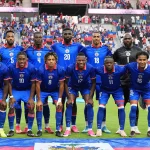
Fifty-two years is a long time to wait. But Les Grenadiers are back — and they didn’t come alone. Haiti’s 26-man roster for the 2026 FIFA World Cup is a testament to the power of the diaspora, the resilience of a nation, and a new generation of Haitian footballers making their mark across the globe.

A Squad Born Abroad, Built for This Moment

Haiti’s final 26-player roster for the 2026 FIFA World Cup features a squad composed almost entirely of diaspora talent, with only one domestic league player making the cut. Players were drawn from France, Belgium, England, Portugal, the USA, Canada, Ecuador, Iran, Hungary, Slovakia, and Haiti itself — making Les Grenadiers one of the most geographically diverse squads at the entire tournament.

The squad includes three goalkeepers, eight defenders, seven midfielders, and eight forwards, with an average age of just 24 — and only five players older than 30. The country has never had a pool of so much young talent playing professionally abroad at such a high level on the same team.

The Captain: Johny Placide

At 38, captain Johny Placide is the oldest player in the group and the only member who was alive during Haiti’s 1974 World Cup appearance. The veteran goalkeeper is the steady hand and heartbeat of a young squad stepping onto the world’s biggest stage for the first time in most of their lifetimes.

The Attacking Threat: Duckens Nazon

Duckens Nazon, Les Grenadiers’ all-time leading scorer with 44 goals in 74 caps, anchors the attack. He was instrumental in Haiti’s qualifying campaign, scoring six goals, including a hat-trick against Costa Rica. When Haiti needs a goal, the ball finds Nazon.

Premier League Quality: Jean-Ricner Bellegarde

Wolverhampton Wanderers midfielder Jean-Ricner Bellegarde brings Premier League quality to the squad, and he is widely considered the team’s most complete midfielder, offering composure in possession and creative vision in the final third. Bellegarde switched allegiance from France for this campaign — a commitment that speaks volumes about what representing Haiti means to him.

The New Arrival: Wilson Isidor

Sunderland striker Wilson Isidor recently switched allegiance from France to Haiti and made his debut for his new nation in March. His pace, finishing ability, and willingness to join the Grenadiers’ cause adds a dynamic dimension to the Haitian attack that opposing defenses will need to account for.

The Coach: Sébastien Migné

Sébastien Migné took over as Haiti’s head coach in the summer of 2024. A French boss with major tournament experience, he guided Kenya at the 2019 Africa Cup of Nations and later served as assistant to Cameroon’s head coach at the 2023 edition. Because Les Grenadiers played their qualifiers in Curaçao due to conflict at home, Migné has never actually been to Haiti — yet he has forged a unified, battle-tested unit regardless. He largely stayed loyal to the core group of players that carried Haiti through qualifying, reflecting his emphasis on continuity and chemistry.

The Lone Hometown Hero

Midfielder Woodensky Pierre of Violette Athletic Club is the only player from Haiti’s domestic league on the roster — a reminder of just how much the country’s football ecosystem has been shaped by its people scattered across the world.

The Mountain Ahead

Drawn into Group C alongside five-time World Cup winners Brazil, 2022 semi-finalists Morocco, and first-time qualifiers Scotland, Haiti faces the most difficult group of any debutant nation at the 2026 tournament. The odds are steep. But Les Grenadiers have never needed anyone to believe in them to get the job done.

This squad carries more than a nation’s football hopes. They carry its history, its spirit, and its flag — even when others try to take it away.

Nou la. Allez Les Grenadiers. 🇭🇹


Follow Grenadiers Nation for match coverage, player features, and everything Haiti 2026.

Photo credit: FIFA (Emilee Chinn/Getty Images)

Kits Ready, Pride Intact: Les Grenadiers Suited Up for Historic Return

The jerseys are done. The moment is here. Despite a last-minute controversy that stripped revolutionary imagery from their kits, Les Grenadiers take the pitch tonight against Scotland — and they do so representing every Haitian who ever dared to dream big.

When Haiti faces Scotland Saturday night, it will mark the nation’s first World Cup appearance in 52 years. And the road to this moment was never going to be simple.

The Haitian Football Federation was told to modify the team’s uniforms after FIFA determined that artwork depicting the Battle of Vertières — a 1803 confrontation that helped pave the way for Haitian independence from France — was too political. The decision landed like a gut punch for a fanbase that had embraced the original design as a source of deep national pride.

The illustration of the Battle of Vertières, with the Haitian flag embedded on the shirts, had been worn by players in two warm-up friendlies before FIFA objected. Colombian sportswear brand Saeta created the jerseys in collaboration with the Haitian Football Federation, and the original design featured artwork inspired by the battle that helped secure Haiti’s independence.

The FHF didn’t take the ruling quietly. A team spokesperson called FIFA’s decision a misinterpretation, noting pointedly that Haiti qualified for this World Cup on November 18, 2025 — the same date as the Battle of Vertières in 1803.

Saeta said in a statement that it would comply with the ban even though the design “was not intended as a political statement,” but rather as a “tribute to the men and women who contribute every day to Haiti’s future.”

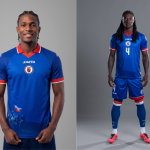
The revised jerseys — available in Haiti’s traditional blue for home games, white for away matches, and red as a third option — were already worn by players for FIFA’s official portraits before the tournament began.

This is also not the first time Haiti has faced this fight in 2026. The International Olympic Committee required the removal of an image of Haitian founding father Toussaint Louverture from Haiti’s opening ceremony uniforms earlier this year — a painful parallel that designer Stella Jean addressed directly. “Either way, Haiti has to be setting a record: Two rebukes from the highest international sports authorities in just a few months,” Jean told the Associated Press.

The original jerseys were so beloved that they sold out on Saeta’s website, with the brand not yet selling the altered versions.

But here’s what no rule change can take away: Les Grenadiers are on the world stage. The history lives in the players, in the fans, and in every Haitian heart that will be watching tonight. The crest is still on the chest. The colors still fly.

Nou la. We’re here. Let’s go, Grenadiers. 🇭🇹