
By Grenadiers Nation Staff | June 13, 2026
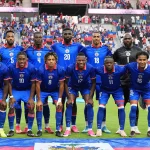
Fifty-two years is a long time to wait. But Les Grenadiers are back — and they didn’t come alone. Haiti’s 26-man roster for the 2026 FIFA World Cup is a testament to the power of the diaspora, the resilience of a nation, and a new generation of Haitian footballers making their mark across the globe.
A Squad Born Abroad, Built for This Moment
Haiti’s final 26-player roster for the 2026 FIFA World Cup features a squad composed almost entirely of diaspora talent, with only one domestic league player making the cut. Players were drawn from France, Belgium, England, Portugal, the USA, Canada, Ecuador, Iran, Hungary, Slovakia, and Haiti itself — making Les Grenadiers one of the most geographically diverse squads at the entire tournament.
The squad includes three goalkeepers, eight defenders, seven midfielders, and eight forwards, with an average age of just 24 — and only five players older than 30. The country has never had a pool of so much young talent playing professionally abroad at such a high level on the same team.
The Captain: Johny Placide
At 38, captain Johny Placide is the oldest player in the group and the only member who was alive during Haiti’s 1974 World Cup appearance. The veteran goalkeeper is the steady hand and heartbeat of a young squad stepping onto the world’s biggest stage for the first time in most of their lifetimes.
The Attacking Threat: Duckens Nazon
Duckens Nazon, Les Grenadiers’ all-time leading scorer with 44 goals in 74 caps, anchors the attack. He was instrumental in Haiti’s qualifying campaign, scoring six goals, including a hat-trick against Costa Rica. When Haiti needs a goal, the ball finds Nazon.
Premier League Quality: Jean-Ricner Bellegarde
Wolverhampton Wanderers midfielder Jean-Ricner Bellegarde brings Premier League quality to the squad, and he is widely considered the team’s most complete midfielder, offering composure in possession and creative vision in the final third. Bellegarde switched allegiance from France for this campaign — a commitment that speaks volumes about what representing Haiti means to him.
The New Arrival: Wilson Isidor
Sunderland striker Wilson Isidor recently switched allegiance from France to Haiti and made his debut for his new nation in March. His pace, finishing ability, and willingness to join the Grenadiers’ cause adds a dynamic dimension to the Haitian attack that opposing defenses will need to account for.
The Coach: Sébastien Migné
Sébastien Migné took over as Haiti’s head coach in the summer of 2024. A French boss with major tournament experience, he guided Kenya at the 2019 Africa Cup of Nations and later served as assistant to Cameroon’s head coach at the 2023 edition. Because Les Grenadiers played their qualifiers in Curaçao due to conflict at home, Migné has never actually been to Haiti — yet he has forged a unified, battle-tested unit regardless. He largely stayed loyal to the core group of players that carried Haiti through qualifying, reflecting his emphasis on continuity and chemistry.
The Lone Hometown Hero
Midfielder Woodensky Pierre of Violette Athletic Club is the only player from Haiti’s domestic league on the roster — a reminder of just how much the country’s football ecosystem has been shaped by its people scattered across the world.
The Mountain Ahead
Drawn into Group C alongside five-time World Cup winners Brazil, 2022 semi-finalists Morocco, and first-time qualifiers Scotland, Haiti faces the most difficult group of any debutant nation at the 2026 tournament. The odds are steep. But Les Grenadiers have never needed anyone to believe in them to get the job done.
This squad carries more than a nation’s football hopes. They carry its history, its spirit, and its flag — even when others try to take it away.
Nou la. Allez Les Grenadiers. 🇭🇹
Follow Grenadiers Nation for match coverage, player features, and everything Haiti 2026.